
Wiley
COMING SOON: Assessing Animal Welfare
COMING SOON: Assessing Animal Welfare
Verfügbarkeit für Abholungen konnte nicht geladen werden
Autor: G. Mason | B. Nielsen | M. Mendl
Erscheinungsdatum: September 2026
Auflage: 1. Auflage
Sprache: Englisch
Form/Einband: Softcover
Beschreibung:
A clear, practical guide on how to use validated indicators of affective states
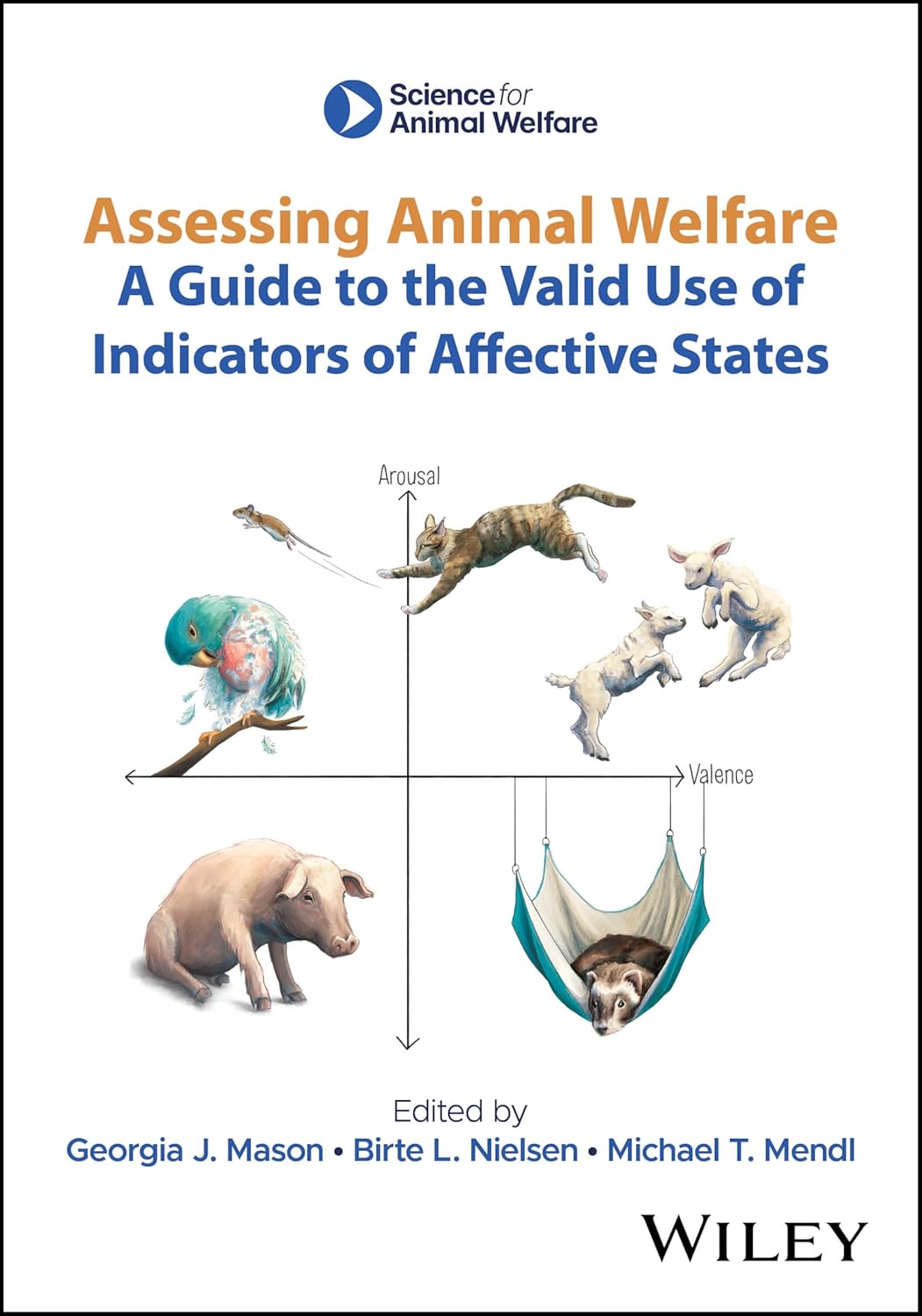
Assessing Animal Welfare is a guide on how to use accurate indicators to assess the welfare of animals. The basis for this book is construct validity: how we can validate different indicators that are commonly used to assess animal welfare and apply this knowledge when using these indicators.
Starting with two chapters on the challenges of assessing emotions and moods in animals, and the importance and basis of construct validation, the following chapters evaluate the validity of 11 indicators that range from being suitable for assessing short-term emotions to assessing cumulative negative affect over a lifetime. Each chapter further highlights the limitations of each indicator and provides clear, useful guidance on its interpretation to avoid associated pitfalls. The book also shows how different indicators can complement each other, with real-life examples showing how to put theory into practice. The final chapter concludes by discussing some of the remaining challenges.
Written by leading experts in their respective fields, Assessing Animal Welfare presents:
- Five key approaches to assessing the construct validity of a welfare indicator: using humans as models; observing how indicators change in rewarding or punishing situations, or when in the presence of threats to/promoters of ancestral fitness; taking a pharmacological approach; and assessing co-variance with already validated indicators
- Indicators of emotion, focusing on preference/avoidance, vocal signals, acute corticosteroid responses, body temperature and heart rate, ideal for assessing short-term events like handling, transport, etc.
- Indicators of cumulative welfare focusing on abnormal repetitive behaviour, cellular aging, and hippocampal plasticity
- Indicators of mood, focusing on judgement biases, play, the hormone DHEA, and measures of reward responsiveness, ideal for assessing effects of long-term situations such as housing conditions
- How each valid indicator may sometimes yield false leads (suggesting affective states that are absent) or false null results (overlooking affective states that are present), and ways to avoid these pitfalls.
Assessing Animal Welfare serves as a clear and practical guide for animal welfare researchers, veterinarians, and students of animal welfare science, helping them evaluate and use the most accurate affective state indicators for a given situation.
Buchpreis zum Zeitpunkt der Veröffentlichung variabel
Share